
OBITUARY
Lewis Lawrence Smith
December 19, 1933 – September 26, 2010
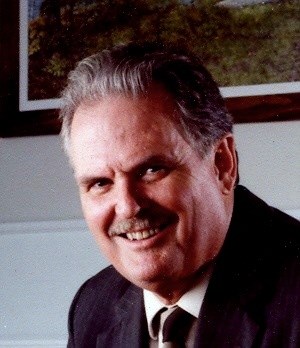
Lewis Lawrence Smith, 76, an economist who created and promoted alternative energy programs and policies long before they became widely accepted, died peacefully September 26 at his summer home in Freeport, Maine. He did most of his work – including early biomass energy projects– in Puerto Rico where he lived with his wife Trinita Muñiz Burgos, Together they raised four children as well as two nephews and one niece after their parents had died.
Smith was director of the Office of Energy for the Commonwealth of Puerto Rico (now the Energy Affairs Administration] between 1986 and 1990. During his tenure he supervised the construction and start-up of what was then the largest grid-supply photovoltaic generating unit in Latin America. He also helped to supervise field tests using sugar cane for energy. From 2002 to 2006 he was a member of the governor’s Advisory Committee on Energy.
Before becoming director of energy, Smith served as a consulting economist to the Center for Energy & Environmental Research at the University of Puerto Rico, the Soil Conservation Service and the State Sugar Council of the Dominican Republic. He also served as director of the Office of Economic Research (Fomento) during the 1970s. From 1966 to 1971 he was an economist for the Commonwealth Oil Refining Company in Puerto Rico. Between 1961 and 1966 he was financial and economic assistant to the assistant executive director of the Puerto Rico Water Resources Authority.
Following his government work, Smith returned to consult as an economist with an expertise in alternative energy, including advising the creation of two major biomass projects based on the conversion of elephant grass, sugar cane residue among other sources.
Smith was born in Philadelphia, Pa. in 1933, the son of Lawrence M.C. and Eleanor Houston Smith. He spent his childhood in Washington DC, where his father was an official of the Roosevelt administration. He attended Jackson Elementary School, Gordon Junior High, and St. Albans. In 1948, when his parents returned to Philadelphia, Smith attended Germantown Friends School, where he graduated in 1950.
He graduated from Harvard University magna cum laude and went on to the Harvard Business School where he got his MBA. He served as an enlisted member of the Air Force from 1954 to 1956. From 1959 to 1961 Smith worked for the Agency for International Development in Paraguay.
Smith belonged to a vigorous, alternative segment of the economist community often ignored by the media. Just two days before he died he wrote the widow of one of his favorite high school teachers describing him as “constantly questioning, stimulating or, as my father would say, ‘poking’ other people intellectually.” The description applied to Smith as well.
In 2006, Smith addressed a conference at Harvard University at which he analyzed the state of modern economics:
“Today economics is in a state of turmoil. On one hand, neoclassical economics lacks both humanity and realism. On the other, its supporters retain most of the “seats of power” in economics and defend them fiercely. Nevertheless, its credibility has been badly damaged by decades of on-the-job disasters and by trenchant criticisms from dissident economists. So today our discipline urgently needs a new paradigm, but conceptually and psychologically, it is not ready. New approaches abound, but no one approach has gained widespread support."
Smith is survived by his wife, Trinita Muñiz Burgos and four children – Clemson Lewis Smith Muñiz, Stanley Houston Smith Muñiz, Sarita Eleanor Smith Hanley and Rebecca Smith Albert– as well as 10 grandchildren and two surviving legal dependents, Eduardo Enrique Pellot Muñiz and Norma Rita Pellot Muñiz.
Smith is also survived by five siblings: Eleanor Kenner Morris, Samuel H. Smith, G.G. Meredith S.S. Smith, Sarah L.O. Smith, and Mary Minor Smith.
Show your support
Add a Memory
Share Obituary
Get Reminders
Services
SHARE OBITUARYSHARE
- GET REMINDERS
v.1.18.0