
OBITUARY
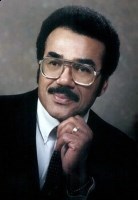
Harold V. Reasby
January 18, 1931 – November 30, 2009
That I can write my reaction to this man named Uncle Ramos shares the impact he had to become a memory of a preschooler. I went to this movie unknowledgeable about black people. Nor was I aware Uncle Ramos was in America. In a native Maori community in New Zealand, I lived as a white minority child. I am not aware of this, either.
Uncle Ramos sang to me with his warm grandfatherly face. There was an animated blue bird and a yellow butterfly flittering around Uncle Ramos' shoulder as he sang the catchy lyrics to Zip-A-Dee-Doo-Dah. This wonderful dark brown face singing this happy song filled the movie theatre's screen. I still have this image of Uncle Ramos' face singing to me 60 years later. I have also kept my books from this time because of their importance in my life. As a small child I did not understand that this was Walt Disney's first live action movie Song of the South. I was 3 or 4 years old and this was my first movie, 1940's.
Meeting Harold Reasby
I was going to be 16 years old when I met Mr. Reasby who taught my American History class at Ingraham High School. He was going to be the first American black that I would know. Today that seems difficult to believe this meeting would take so long to happen in a city with 500,000 people. Seattle was very provincial and we did not travel very far. I did not get myself to the neighboring Magnolia Bluff District until after my marriage.
Seattle had two ethnic districts. Asians were on Beacon Hill and blacks were clanning on Capital Hill. I had not thought of this as separation but as liking to be together around family and similarities of culture. Seattle has still not identified that there is a third group of ethnic culture to be enjoyed. The Ballard District's identity is Scandin-avian including a museum, fishermen and Norway's lodges. They also serve the lefse and say oftah. This part of my life was lived between Ballard and the north-end of Seattle. We did not have a district with a downtown so we were labled the "northend."
Fifty years have past since American began a course of integration and equality for all people and all citizens. I was born a World War II Victory Baby without this realization until 50 years had past my parents WWII marriage. Fifty years have almost past since I met Harold Reasby.
Meeting Harold Reasby's was as impacting as black actor Sydney Poitier cast as a physician in the Movie Guess Who is Coming to Dinner. Sydney Poitier was a black man having dinner in a white home. This movie was an overwhelming drama in the 1960's. Today it seems to lack drama or a reason for a movie and it received 10 academy awards. One might not even understand the purpose of the movie. The television set at this time was white people inside a black box. This was how we understood our-selves as a culture taught by the media. President Kennedy was alive and living Camelot in the nation's capital as the nation's first Catholic president. Catholicism was presented by the media as a presidential candidate's issue. We did not know Martin Luther King. We hadn't heard the news that MLK was "non-violent." We were living in a nation that was gong to erupt into discord. We didn't know this either.
Reasby was a black man in a school that had no blacks. He was in the northend of Seattle which was a community without blacks. He was a very mellow and caring educational personality. His presence was impacting, his teaching was of excellence, his students loved him and his character was exemplary. In the movie Gone With the Wind, Rhett Butler provided America with its first piece of profanity and it shocked a generation of movie goers, The Beetles from England were singing "We All Live in a Yellow Submarine." In the high school we were further identified with a word new to us. . . "wasps" meaning white anglo saxon protestant . Were we amused at such a word for ourselves. Someone had identified our group without giving us any understanding of other folks and their identity.
Reasby was a healthy teacher role model. He imparted his relational health to his students while teaching his American History. It was a wonderful day to experience one hour with Harold Reasby. His love of his students and his love of teaching was one of the most significant parts of my Seattle Public School education. As a teen, I remember wondering why Mr Reasby wanted to teach in an all white school.
50 Years of American Pride.
We can embrace and celebrate our ethnic heritages which creates our unity. Our New Years 2010 includes 50 years of pride in America for its unity as a nation founded as a melting pot of people. I do remember the animated blue bird and yellow butter fly on Uncle Ramos shoulder and in the history class Harold Reasby had "plenty of sunshine coming my way." Zip a Dee Doo Dah sung by Uncle Ramos was the nation's award winning song in 1947. Harold Reasby is to be remembered for being there for us before we knew of Martin Luther King. He sat at the front of the class and just his presence teaching American History taught us non-violence . It is unusual that the word non-violence would be place anywhere near his name or his memory. He was there before the beginning. I do know I was very proud of Harold Reasby. That pride will continue in the City of Seattle. Like Martin Luther King, he practiced his own methods to teach who he was.
There are many many many people who have worked on the issues of equality. Sometimes, today, when I meet a young black I see their character and the lives they are creating. And sometimes I think I will just sit down and cry. Has their been a more beautiful conclusion to this journey in American History? Harold Reasby was there to teach more than American History. Harold Reasby was there to let me know that his reasonableness and fairness was going to create another future for school children in Seattle.
Harold Reasby 1931-2009 78 years
Ingraham High School 1960's
Seattle Public Schools
American History Teacher
Superintendent of Schools
Edmonds and Monroe, Washington
By Marilyn Shortt (Bailey) Ingraham High School
Class of 1963
Student body and class officer
My family was to work on public school integration in the southwest, Headstart and build a University for minority students south of Chicago. We worked on inter-racial summer day camps and my daughter did inner-city mission camps as a teen and later became a counselor.
ASK.COM Review
Nominated for ten Academy Awards, this comedy-drama achieves classic status for several reasons. The first and most obvious is its early exploration of interracial marriage, a still-taboo subject at a time when violent racial riots were igniting in cities across the United States. Director Stanley Kramer, known for dissecting serious social issues in films such as Guess who's Coming To Dinner, Inherit the Wind (1960) and Judgment at Nuremberg (1961), as well as for his sense of humor in films such as It's a Mad, Mad, Mad, Mad World (1963), blends his sensibilities beautifully. He and screenwriter William Rose (Best Original Screenplay) inject welcome humor while allowing the audience to peek into the hearts of liberal whites and wary blacks, without proselytizing. Film history is made as well: In Spencer Tracy's last film role (he died weeks after production), he delivers a monologue to Katherine Hepburn (Best Actress) about the persistence of long-lasting love that is heartbreaking considering the imminent end of their real-life romance. The collaboration represents Kramer's fourth with Tracy and second with Sidney Poitier, who brilliantly portrays Dr. John Prentice's perfect gentleman with humor, grit, and charisma. In the same year, Poitier starred in To Sir, With Love (1967) and In the Heat of the Night (1967), which won Best Picture. Film newcomer and Hepburn's real-life niece Katharine Houghton is a delight as Tracy and Hepburn's bright and independent daughter whose love for Dr. Prentice is fierce and fearless, if a bit naive. Isabel Sanford, Cecil Kellaway, and Beah Richards lead a rich supporting cast in a film that, like so many works of art that broke new ground, has come to seem dated in its cautious, watered-down attitude, but which deserves to be applauded and celebrated for its courage, incendiary in its time. ~ Lisa Kropiewnicki, All Movie Guide
Cast
- Spencer Tracy - Matt Drayton
- Katharine Hepburn - Christina Drayton
- Sidney Poitier - John Prentice
- Katharine Houghton - Joey Drayton
- Beah Richards - Mrs. Prentice
- Roy E. Glenn, Sr. - Mr. Prentice
- Isabel Sanford - Tillie
- Cecil Kellaway - Monsignor Ryan
HAROLD REASBY
By Richard Sevens
Seattle Times
Hal Reasby, first black schools chief in Edmonds and Monroe, dies.
Harold Reasby, first African-American superintendent of Edmonds and Monroe school districts, died of a cerebral hemorrhage Nov. 30. He was 78.
By Richard Seven
Seattle Times staff reporter
Article
Seattle Times Obit 12-24-2009
By Richard Seven Staff Writer
Hal Reasby spent more than three decades in education and tutored in retirement.
Family and friends this month celebrated the life and career of Harold "Hal" Reasby, the first African-American superintendent of the Edmonds and Monroe school districts.
He died of a cerebral hemorrhage Nov. 30. He was 78. Mr. Reasby spent more than three decades in education and tutored even in retirement. He spent 22 years in the Seattle School District, beginning in 1958 at Ingraham High School, where he taught and coached track.
Mr. Reasby was recruited by the Seattle district for an administrative intern program that led to his doctoral studies at the University of Washington. He earned a doctorate in educational administration in 1973 and that same year was named deputy superintendent for the district. Part of his work entailed shaping the Seattle district's desegregation plan.
From 1980 to 1988, he worked as superintendent of the Edmonds School District. He was known for his innovative, hands-on approach and was credited for improving test scores and community confidence in the district.
"He worked with people very personally," said his wife, Ruby Lavert Reasby, of Seattle. "He felt every child deserved the best education they could get, and he was always willing to go further." He retired shortly after the Edmonds district's 30-day teachers strike in 1987.
"The strike just broke his heart," his wife said. "He already had been in education something like 30 years by then, and I told him, 'Why don't you retire and we can move on?' And he did." He began concentrating on his many hobbies, including wood carving, wildlife photography and archery, but he couldn't leave education.
He spent that first year off the job working as a volunteer aide in two kindergarten classes and coached two high-school high jumpers. He also formed a grass-roots group with his wife to lobby the state Legislature for more education support and served as a member of the Governor's Commission on Children.
In 1989, he took the superintendent's job in the Monroe School District as its enrollment was swelling. He quickly began decentralizing the administration and giving individual schools more power.
In 1993, he retired for good, marking 34 years in education. "It's been good to me," he said at the time. "I'm really going to miss the kids."
Mr. Reasby was born Jan. 18, 1931, in Waterloo, Iowa. He attended Iowa State Teachers College and in 1955 earned a master's degree in education there.
He moved to Seattle in 1956. He met his wife-to-be at Garfield High School, where she worked in the school office. He asked her to lunch and she said yes, but he would have to join her at a cafeteria table full of students. He agreed.
In 1996, he and his wife moved to Las Vegas. Even there, he volunteered time tutoring kids at the couple's home. He was especially concerned about helping Hispanic boys struggling with the English language to get a foothold, his wife said.
Two years ago, they moved back to Seattle, taking trips to Deception Pass and to her parents' cabin on the Skagit River. He remained a voracious reader.
In addition to his wife, he is survived by his son Garth Reasby and daughter-in-law Heather Reasby, of Edmonds; mother-in-law Margrett Lavert, of Seattle; sister-in-law Barbara Lavert, of Seattle; and nephew Jerod Lavert and his wife, Inderjit, of Seattle. He was preceded in death by his parents, Ruth Patterson and Harold Velton Reasby Sr.
Show your support
Add a Memory
Share Obituary
Get Reminders
Services
SHARE OBITUARYSHARE
- GET REMINDERS
v.1.18.0