
OBITUARY
Elmar Poldmaa
28 May, 1925 – 2 May, 2015
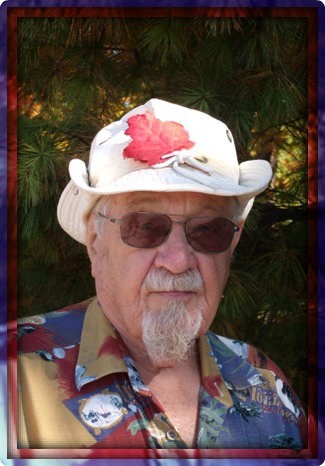
Elmar was born on June 28, 1925 in Liikvald, Estonia, the son of Gustav Feldt and Emilie Johanna Udeberg. Elmar grew up in Uudekula, Estonia with five brothers - Kaarel-Robert, Rudolf, Roland, Erich and Rein, and four sisters - Helga, Alma, Salme and Luule. Their father was a local shoemaker in Uudekula. The family later moved to a large 40 hectare farm located in Tamsalu, which was seized by Russia during the annexation of Estonia in the Second World War. Many years later it was returned to Elmar as the inheritor, after the dissolution of the Soviet era in 1991. One of the most poignant events in Elmar's later years was to be able to travel back to Estonia to transfer the title of this heritage farm to his brother Rein's family, who had remained in Estonia.
The Udeberg family in Uudekula, Elmar's mother's family, still host a yearly family reunion with more than 1200 members, celebrating the founding of Uudekula dating back 300 years.
Elmar was an Estonian Army veteran.
WWII began when he was barely out of childhood. Elmar lied about his age to pass the requisites for conscription and went off to war. He boarded a ship with an Estonia Regiment that was bound for Gdansk, Poland. On the night of September 21st, 1944 they watched from sea as Tallinn, the capital of Estonia, was bombed by Russian forces. There was a rumor on board that the captain was planning to turn the ship and head for Sweden but instead managed to slip through to Poland without incident, to the port of Gdansk where Elmar was sent to a military training camp 50 km away. There he remained and trained as a machine gunner. In January 1945 the Estonian Army was requested to join forces with the German Army on the Russian front in southern Poland along the Czech border. The 60 km march to the front was miserable, slogging through mud and snow, sleeping only a few hours a day. In one of several battles, the Germans failed to gain control of a small village in Poland. The Estonian Army was instrumental in gaining the control of this village, and driving the Russians back. Elmar described a close call where the ground in front of him was lit up with machine gun fire. They saw two Russian soldiers in a ditch targetting their unit. Another Estonian soldier managed to sneak around and toss in a grenade to eliminate the threat. One night, while in the forest getting instruction for their movements, Elmar fell asleep leaning against a tree and when he woke up he realized he was alone with no idea where the rest of his outfit were, the tracks in the snow being too many to tell. He wandered nervously for most of the night until he finally found his unit.
Elmar also found humourous stories to share about this horrendous time. One was a funny incident involving a pig that was on a farm near their camp. An Estonian known as Guido decided he was going to catch the pig and so jumped on the pig's back. It ran towards the Russian line, Guido falling off and other Estonians getting involved chasing the pig, which kept running towards enemy lines. When the Russian soldiers started shooting at the pig, it turned around and chased the Estonian soldiers back. He said it was very funny to watch. No one managed to get the pig in the end.
Near the end of the war Elmar narrowly escaped being executed. They had been taken prisoner with some German soldiers. He described seeing a doorway where soldiers were being forced through. He also noticed a ditch that ran by them and it was filled with blood. As they were moved slowly toward the door an officer noticed that they were not German but Estonian and told them to get out of the line. They were taken away and told to run like hell - which they did. They made their way to the town of Melnik where the Estonian army was attempting to get across the bridge to give themselves up to the American army. This was their best chance to survive, as they knew the Russians were executing German allies. Elmar described a big football field full of German and Estonian soldiers. The German officers were negotiating safe passage across the bridge with a Czech official. Elmar said that all the Estonian soldiers were told to remove the Estonian insignia from their uniforms and to blend in with the Germans and to speak only German or remain silent. In this way the Estonian Army managed to get passage across the river in Melnik. They continued to march with the Germans until they were well into American territory and then to the surprise of the Germans, set off on their own to give themselves up to the Americans. They spent many days pursuing the Americans but each time they made it to the next village the Americans had already left. At one point they came across a German officer that was trying to escape with his family back to Germany. He had a map and made a deal with the Estonians to help his family in exchange for directions to Germany. Once in East Germany the Estonian officer again gathered the troops and told them that they were best off splitting up and everyone to go their own way. Many of the Estonian soldiers had relatives in Germany and so headed off. Elmar, alone, continued his long walk across Germany towards Hamburg. He walked for a number of days sticking to the forests to avoid attention but one day he stepped out on the road and saw another man standing there. He was dressed as a civilian and they both said “Tere” (hello) at the same moment. He had met a fellow Estonian and they teamed up to walk to Hamburg. They were captured a few times along the way but always managed to get away. At one point they were sleeping in a guest house that was full of Polish soldiers when the doors swung open. Russian and American soldiers took them all prisoner and taken to a POW camp. They explained that they were Estonians and were separated from the others and put in a room, not sure what was going to happen. Two Americans came in with a table and chairs and food. Their thoughts were that this was their last meal before execution. After they finished eating they were taken to meet the camp commandant. During this time Elmar and his companion came up with an elaborate lie. Elmar explained that he took the Germany uniform that he was wearing from a dead soldier because his own clothes were so worn out and that they were not soldiers at all. They were on their way to Hamburg where his companions' mother now lived. The commandant believed their story and granted them leave. Relieved and grateful, Elmar’s companion clicked his heels together and gave a salute and turned. The commandant asked if they weren’t soldiers why they reacted like soldiers. Elmar again explained they learned this while being scouts. The commandant ordered the American soldiers to drive them to Hamburg. After arriving at the first village it was obvious the Americans didn’t know where they were going so they kicked them out of the car and left. Elmar’s journey continued. Years later Elmar found out from another Estonian friend and historian (Fred Kraav) that the commandant of the POW camp was actually an Estonian and because of their common heritage….let them go. After getting refused for a number of refugee camps or DP camps as they were called, they finally managed to get into one where Elmar became a security policeman. He spent a number of years here until he got passage to England.
These 9 years were horrendous ones, and many people would not have survived the mental and physical challenges that he faced. Although those experiences must have left many scars, his good nature and faith in humanity always shone brighter. These stories have become our Poldmaa Family true life legends ... of escaping execution by an off-chance remark of a guard, walking for six weeks on frost-bitten feet through the mountains of Poland in winter eating farm animals' food, insects and frogs, and learning to swim when he dove into the Alba River to freedom, with bullets hitting the water all around him.
During the firebombing of Dresden, hidden in the hospital bunker, he escaped the tragedy that occurred outside. His future wife Ebba was actually on the outskirts of the city, watching the bombs landing on Dresden.
Elmar and Ebba both had heroic stories about their war years. Their strong willed constitution, and belief in a better future for their family carried them to a safer, happier life.
Elmar Poldmaa and Ebba Marits met in London England, at a dance hall that most Estonians attended on a regular basis, to search out other ex-patriots and news of their families. It was a quick courtship and two weeks later, on August 10, 1951, they were married at 3 Horner House, Shoreditch.
Elmar joined the Merchant Marine, and served as a mariner from a base in England after the war, traveling to far off places like Casablanca Morocco, where he purchased a gift of pearls for his new wife, Ebba.
He also worked part time at the Peak Freans' Cookies in London, and brought home bags of 'broken' cookies from the factory, to the delight of his family.
In April of 1952, their first child Enn was born, followed by Helle in September of 1953, and Taimi, born in December 1954.
On February 03, 1955, they left the port of Southampton, aboard the Samaria - Cunard steamship to emigrate to Canada. After a turbulent six weeks at sea they finally arrived in Canada with their three small children at Pier 21, Halifax, Nova Scotia on March 19, 1955. Ebba's sister Dore, recently married to Kalju Manni were their sponsors in Canada. The original plan was to travel to Port Arthur Ontario, and work alongside Kalju in the forestry industry. Plans changed because of work shortages and it was decided that Elmar was suited to work in the gold mines north of Larder Lake, on the Ontario-Quebec border in
northeastern Ontario. A kind woman at the train station, seeing this young family about to embark on an immense journey through the wilderness, directed Ebba to get food and supplies for the long trip. After a few days of train life, seeing nothing but rocks and trees and trees and rocks, Ebba was suspicious and fearful of a Russian conspiracy that was taking them to Siberia after all.
During the 10 years that they lived happily in Larder Lake, Elmar and Ebba were blessed with three more children - Kaja, born in May of 1957, Alar, in May of 1960, and Tarmo, January 1963. Ebba's father, Rein Marits, nicknamed 'Vana', came to live with the family. With nature at the doorstep, the family engaged in fishing, hiking, skiing, blueberry picking, swimming at the nearby lake and many camping trips. Ebba was a competent and creative homemaker, sewing all the clothing, canning mountains of berries, and keeping everyone well-fed from the bounty of the land. Elmar hunted and fished and was adept at preserving these foods too. All the necessary chores of a growing family always had an element of creative art and fun.
In 1964, the Trans-Canada Highway was completed, and the family took a different route on the bi-annual trip to see the cousins in Port Arthur (Thunder Bay) Ontario. They drove through Sault Ste. Marie, and the following year it became the family's new home. After several tragic mining accidents in the gold mine, and the long work shifts spent away from his family, Elmar had decided to find kinder and safer employment, which led to new opportunities in Sault Ste. Marie. An old family friend, Vambu, encouraged Elmar to apply to become a school custodian. Elmar then began a long career until retirement with the Algoma District School Board at several public schools in 'The Sault', adding creative carpentry and flower gardens to each, and much loved by all students and staff.
His love of nature was paramount, and he liked to explore the wild places around Lake Superior, Ranger Lake, Goulais Bay and St. Joseph's Island.
Beach combing became a family tradition, searching for the ultimate piece of root or driftwood that Elmar could work with, to create amazing pieces of small furniture, or sculptures of mythical birds and beasts.
Now in a larger community, there was also time and opportunity to be involved in community organizations and the arts. He and Ebba performed in plays and musicals in the Sault Opera Society, and the Arts Guild. They belonged to the Sault Ste. Marie Estonian Association and Elmar was a member of The Sault Ste. Marie Estonian Hunters Club. The young family spent many weekends and holidays building and enjoying the Estonian lodge -"Eesti Rand" on the shore of Goulais Bay. Elmar was also a member of the Estonian Lutheran Church, and he and Ebba hosted the traveling ministers. He also loved to read, enjoyed cross-country skiing with Ebba and was intrigued by new ways of cooking. A family specialty was smoked hams and various savory cured fish. As each of his children grew into owning properties, he made sure they all planted the cornerstones that make a home; lilacs and fruit trees, white tea roses Vana had brought from England, a potato patch, a sauna and a smoke house. He watched many hockey games by association, as Ebba never missed one that was televised.
Elmar enjoyed traveling and he and Ebba managed a few vacations; a cross-canada trip to Bushart Gardens in Victoria B.C., a trip to Daytona Beach, Florida to visit Estonian friends Irma and Henn, many trips to Thunder Bay to visit Ebba's sister Dore and family and a memorable trip to Toronto for the 1972 Estonian World Festival. This was the first time traveling on a freeway in Toronto, with 6 backseat drivers; a wonder to have made it there and back alive!
A trip to Sodertalje, Sweden with Ebba, to visit Ebba's sister Maia and family was their first long airflight.
Then, in 1991 Elmar was reunited with his family on a trip to Estonia with daughter Taimi. This was a monumental event for Elmar, since he had not been back to his homeland since leaving at that early age of 17. He reconnected with his family and visited his old homestead. In 2013, Elmar traveled to Germany with son Tarmo, to visit his sister Salme and his niece Leili from Estonia. A spur of the moment trip to Punta Cana in his last month of life with daughter Kaja and husband Sean was a winter getaway he had been dreaming about. He had plans to go to Hawaii, with his eldest son Enn and wife Robin, a landscape he had always been intriqued with, and mentioned continuing to New Zealand on that journey to see his daughter Helle and her family in New Zealand.
Another joy for Elmar and Ebba was the gift of fifteen grandchildren, Tyler (Cheryl), Ashley Rae (Brad Leeson) and Lauren Mae Alleway (Kurt Bevan); Taavi, Sasha, Maia, and Kenzi Stier; Ryan Kalev and Deven Quinton Creagh; Kara Li (Tyson Souliere), Heidi (Tom Moran), and Eerik Rein (Lidianne) Poldmaa; and Marin Ebba, Halaina Kai, and Camaryne Lindzi Poldmaa-Rask. Great-grandchildren at this time of writing are Hazel Mae and Tanner Finn Leeson, Miles Stout and Cooper Evan Donald, Spencer John and Lillian Rae Bevan, Joosef Leevi and Charlie Stanton Souliere and Aksel Liev Moran. The legacy of Elmar and Ebba lives on in all of them and the future children who will share these stories.
We like to think he was dreaming of his further adventures, when he died peacefully in his sleep at the age of 89 on May 2, 2015 at his daughter Kaja's cottage at Old Mill Bay. Both Elmar and Ebba are laid to rest in Greenwood Cemetery, Sault Ste. Marie, Ontario.
….just after Elmar died, Tyler Alleway started this funny thread on our “Poldmaa-Perekond” or family FaceBook page.
It sure helped us all smile through the tears, and to remember how much joy our Isa got from a simple minute of laughter.
It went like this….
Tyler Alleway - “What is your favourite joke that Isa told? Mine is …‘How long is a Chinaman's name.’ Still makes me laugh every time I think of it! :) …just explained it to Cheri, she asked ‘what's the answer?’ ....classic Isa joke….;)!!”
Tarmo Poldmaa answered - “One of my faves! So what did the Scotsman bring to the potluck? His brother.”
Ashley Alleway wrote - “Ty, that's my favourite one too. Brad didn't get it either!!”
Tarmo said “Chris didn't get it either. I am trying to remember the one about the guy measuring the temperature of the birds using his finger up their you know what - maybe Alar remembers..it’s likely too rude for Facebook”
Kara Poldmaa wrote “Tyson and I trying to remember one he told us about the best way to hunt rabbits, but here’s another one he told us..
‘A bear was having a poop when a rabbit came by, the bear said ‘hey Rabbit do you have a problem with poop sticking to your fur?’ The rabbit said ‘No, why?’
- so the bear grabbed the rabbit and wiped his bum with him…”.
Alar Poldmaa wrote “Here's an Isa joke. I think this is the one Tarmo is trying to remember.
“A man shot two ducks in Ontario. As he was walking through the swamp to pick them up, a wildlife ranger came up to him and said, "Duck hunting season is over in Ontario, and those ducks that you shot were Ontario ducks.” "Bullshit!" said the man, "How do you know they are Ontario ducks?"
The ranger picked up a duck and stuck his finger up the duck's ass and then sniffed his finger. "That duck is from Ontario." he said.
"How do you know? said the man. “Trust me”, said the ranger, “I'm an expert”. He picked up the other duck and did the same thing. "Ok," he said, "this one is from Michigan, you can have this one. I am going to have to write you a ticket for the other one. What's your name?"
"Bill Smith," said the man.
"And where do you live?" asked the ranger.
"Sault Ste. Marie," he replied.
"Sault Ontario, or Sault Michigan?" asked the ranger.
The man dropped his pants, bent over and said, "You're the bloody expert you tell me!"
Tarmo replied “Thanks Alar!”
Sasha Donald wrote “An English man comes to Canada for a holiday. Forgetting the difference in road rules he begins driving on the wrong side of the street. A police man pulls him over and asks, "holy heck man, where did you learn to drive like that?" The man apologises and says, “I'm so sorry, I'm from England." The policeman shakes his head. "Well did you come to this country To Die?" The Englishman shakes his head. "No I came here yester-die" (yesterday with an accent) ! Also… I don't get the China man joke…”
Helle Stier wrote “Driving past the graveyard, he asked,"Do you know how many dead people there are in there?" His answer--"all of them"! Lol!”
Robin MacIntyre wrote “One fall someone we were with said they were going hunting, and Isa suggested they take an old glass window with them into the woods. Puzzled, we said “why, what’s the window for?” and Isa said “well, you said you wanted to hunt for partridge!” ;)
Kaja Poldmaa The pane of glass came from when we moved to Goulais River. In the first weeks we had 3 partridge hit our windows, and of course Isa made delicious stew. And so carry a window with you if you want to hunt partridge!"
Kaja continued ... “The best was when Isa asked me "how do they know how fast I am going? …you know, about the "wind shield factor” (Isa was listening to the weather report on tv about the “windchill factor” and thought they were reporting on “windshield speed”
Robin replied “That one is right up there with the "wax machine" mixup, Kaja -Enn has gotten a lot of mileage laughing about that one! “
Kaja said “Thanks Tyler, for starting this! I am laughing so hard can hardly write! I remember back when he was going to see the doctor about his sore knee. He would call me and say the doctor kept asking for "information" about his knee, and I didn’t know what else to tell him. Then finally I figured out the doctor was asking Isa if he had any "inflammation" in his knee!
Sasha wrote - “I never knew if Isa was telling me the truth.... He said he had control of his hearing aid through his watch. So he said it's good because when Emme starts yelling, I can just turn it down and then nod my head. Also... He convinced me as a child that he had wooden toe nails. They were so thick and grainy I had asked him why they looked like that. He said one day they just fell out so he put little pieces of wood in there. I figured, hell this guy is pretty good with wood craft he must be telling the truth!”
Lauren Alleway wrote - “Sasha , one of my favourite memories is going swimming with Isa up at the lake that's at the end of Old Goulais Bay Rd...and I asked him why his toenails looked like that, and out came the story of running through Czechoslovakia during the war...frostbite...he was lucky to keep his toes, because his buddy didn't. ….and Kurt didn't get the Chinaman joke either.”
Cheryl Alleway wrote - “Hey Enn, I think you should put in the details about the wax machine. There are probably a few people that haven't heard it.”
Lauren wrote -“I also remember how Isa would always greet me at the door saying "Who's that?" or "Who are you?"
Sasha answered -”Yeah, and when he would make something delicious like bacon or stew or fish he would say "oh no it's no good. You won't like it".
Kara answered - “Whenever I went over for supper, whatever meat he was cooking, he would tell me it was rabbit.”
Ashley answered - “He always told me it was rabbit stew, too. I loved how when I'd call him and ask, "What's new, Isa?" he'd always ask back, "What's the news?" Every. Single. Time !!! I find myself saying the same thing to people when they ask me that question, with Isa's voice in my head.”
Helle wrote - “Sasha,"How Long" is a chinamen's name. (It's not question)”
Alar wrote - “Here's another variation. An Englishman is visiting his brother in downtown Toronto. As he is about to cross a busy street, he looks to the right for traffic, sees none and proceeds, only to be yanked back by his brother just as a bus passes. "Did you come here to die?" Englishman answers" No, I came here yesterday"
Enn Poldmaa wrote - “OK Cheryl, here it is. Isa called me very frustrated about being unable to get paper for his fax machine. For a while there that is how he was communicating with Helle and Ron. He had been to the office supply store, and they said no, we don’t have that kind of paper here, you need to go get it at the grocery store. So off he goes to the grocery store, and a young clerk directed him to the food storage isle and got him a roll of paper. Isa looked down at it and said - “no - this is WAX paper. I need the other stuff for my WAX machine!!! I need WAX paper!!!!. Poor guy, finally got the clerk to understand - and then had to go back to the office supply store and go through it all again - “F” is not an easily pronounced letter and “fax” ends up sounding like “wax” when pronounced with an Estonian accent …”
…………. end of joke thread ………..
Isa’s Eulogy
by Tarmo Poldmaa
Dear friends and family, thank you for coming today to join us in a celebration of my father’s life - Elmar Poldmaa. Most of us never used his formal name and he was known to most of us simply as Isa - which means father in Estonian. So I will continue in this tradition for his eulogy.
Isa was in a word - Incredible. He was kind, caring, passionate, patriotic, loving, creative, humble and most of he had a sense of humor that would win you over the minute he starting talking with you. These characteristics made him great both as a father and a friend. Isa was someone that you could rely on 100% of the time and he never let you down. I also believe it was these characteristics that allowed him to live through the hardships of WWII, move across the world and provide and raise an incredible family that now extends around the world. It is a living legacy that he was very proud of.
In 1944, Isa lied about his age to get conscripted into the Estonian Army. When I visited Estonia in 1990 Isa's sister Alma showed me a picture of him the day he left for the war. He was leaning against a tree, with a rope for a belt and a look of calm determination on his face - he was only 17 yrs old. Early in my life Isa didn’t talk very much about the war. Most of the stories I remember were ones of my mother’s. It wasn’t until later in his life that Isa began to tell his own stories. I remember one night I was home from university and I was watching the Fifth Estate with Isa. The documentary was called "The Valor and The Horror" and it was about WWII. This episode was about the fire bombing of Dresden and it was providing stories from perspectives of those involved - those dropping the bombs and those on the ground. Little did I know that I was sitting beside one of those who had been on the ground. At the end of the documentary Isa turned to me and said “ I was there when this happened”. I was awestruck. He then preceded to tell me the story of when he was in a hospital recovering from frostbite to his feet suffered on the front. He also vividly described the aftermath of walking through the smoke and rubble- filled streets after coming up from the bunker in the hospital. He described the streets being filled with dragons, breathing smoke and fire. These of course were the hundreds of decorative gargoyles that adorned many of the rooftops in Dresden. He also described the wonder of Dresden before the bombing - in his words “The most beautiful city he had ever seen”. This story of course led to others, and in the later years of his live I managed to record him on my iPad sharing some of his experiences during the war, including his 1200 km walk to freedom across Europe when the war ended. The story of this journey has all the makings of an epic Hollywood Classic - escape, capture, camaraderie, love and most of all humor.
Anyone that has met Isa knows that humor was very important to him. Within about the first 5 minutes of meeting someone he would crack off one of his classic jokes. You have to realize that with Isa it wasn’t necessarily the joke that was funny it was all in the delivery, or in many cases the non-delivery, that was funny. He would forget punchlines half way through or even deliver the wrong one - regardless it was still funny. Just the other day my nephew Tyler posted one of his all time favorite Isa Jokes, which of course lead to a litany of others. As Tyler so perfectly stated “ It didn’t matter how many times he heard the joke it would still crack him up every time”. This was all due to the man delivering the joke. Don’t worry Tyler...you and Alar can continue the tradition of those jokes and it’s important you do so because it is all part of Isa’s legacy.
Isa’s humor wasn’t just tied to his bad jokes - it was part of his character. I can remember so many times where he would get something mixed up or do something that would put us all into fits of laughter and tears - especially my mom. Isa, too would join in the laughter because he had that fantastic trait of being able to laugh at himself.
Isa also had a serious side. He was a passionate artist who could see a bird, a ballet dancer or even a tall ship in what most people would see as random pieces of driftwood. A walk or a fishing trip with Isa usually ended with a pile of wood in the boat rather than fish,or lugging a 100 Ib. root down a beach. You never knew what he was going to do with it until he emerged from his wood-shop with a beautiful creation. These creations of lamps, tables and figurines have now found homes around the world.
Isa was also an avid reader. In the evenings it was rare that Isa wasn’t sitting in his chair reading. When his eyesight deteriorated to the point where he couldn’t read anymore we were all concerned about how he was going to fill that void. Through the incredible work of some great people at The Canadian National Institute for the Blind, Isa’s passion for reading was replaced with a passion for listening to an electronic reader. The CNIB connected Isa to their counterparts in Estonia to give him access to Estonian books and with the help of Ulle Olt and Margit Orusaar in Tallinn Estonia, Isa’s love of books was restored. Isa carried his reader everywhere and was always discussing what he was listening to or learning about. I don’t know what he would have done without this technology and I truly feel it added years to his life. According to my sister Kaja the last book he was listening to was Dog Stories by James Herriot.
Isa was also fascinated with history and tracing his family tree. He was particularly taken by the papers of a linguist / historian at the University of Chicago who claimed that the Estonian culture and language arose from Sumarian roots in the middle east. A few years ago my wife Christine organized a group gift for me on my 50th birthday and I received a DNA kit to be part of the National Geographic’s Genographic Project to trace human origins. It turns out that our family's maternal and paternal lines did indeed trace back to middle east origins. So Isa, you may indeed be a descendant of a distant Sumarian king. Isa also connected with a young Estonian woman Katrin Uudekull, who was working on the family tree for Uudekula (his home village) and the result of her work was the family tree that is on display here at our memorial today. Just lately, Isa was recounting a story around how Uudekula was founded. Apparently 2 brothers (Uudebergs) were traveling across Europe 300 years ago and fell in love with the surroundings, as well as two Estonian girls, and never left. This would be the founding of Uudekula. He was recounting this tale because two of his grandsons are backpacking across Europe as I speak, and are currently in Uudekula so he was warning my sister that her son may not come home.
Isa was also a very caring man and he had a huge impact on many childrens’ lives during his time as a caretaker with the Algoma District School Board. The kids and staff loved him and he was always there to help them and keep them safe. He truly was Elmar the Safety Elephant. Isa left a lasting impression on all the students and teachers he worked with over his career. I know this because once on a flight coming back from Toronto, I handed my boarding pass to a flight attendant and she looked at my name and asked me if I was related to Elmar. I said he was my father. Her response was “he is a great man”. It turned out that she was a former student at HM Robbin’s Public School. That is the sort of lasting impression my dad had on people.
Isa’s love of family was the glue that bound our family together and I know the family values he instilled in all of us will continue to bind us together. Elmar’s Glue - Bonds Strong. Isa was an incredible father, grandfather and great-grandfather. It is now up to us to keep his legacy alive by teaching our children about his life and Emme’s life.They are a part of all of us and we owe it to them to keep their spirits alive in generations to come. We need to keep telling their stories. I’d love to be in my 90’s and hear one of the grand kids or great grand kids crack off an Isa Classic joke or refer to the windshield factor on a cold winter day. Isa, you were a great man and you will always continue to be an inspiration to all of us. We will miss you tremendously but we know your spirit is at peace with the love of your life once more.
“Lives of great men all remind us, we can make our lives sublime and departing, leave behind us, footprints on the sand of time” Henry Wadsworth Longfellow
Obituary, published Sault Star, May 4th 2015
POLDMAA, Elmar - On May 2, 2015 we said goodbye to our father, grandfather, and great grandfather Elmar Poldmaa. Born June 28, 1925, in Liikvald, Estonia to Gustav Feldt and Emilie Johanna Udeberg. Predeceased by wife Ebba Marits and siblings Kaarel-Robert, Rudolf, Roland, Erich, Rein, Helga, and Alma Poldmaa-Heinaste. Survived by Salme Wandinger, and Luule Kindel. Elmar is survived by his children; Enn (Robin MacIntyre), Helle Stier (Ron), Taimi, Kaja (Sean Creagh), Alar (Pam), Tarmo (Christine Rask). "Isa" will be missed by his grandchildren; Tyler (Cheryl), Ashley (Brad Leeson) and Lauren Alleway (Kurt Bevan); Taavi, Sasha, Maia, and Kenzie Steir; Ryan and Deven Creagh; Kara Li (Tyson Souliere), Heidi (Tom Moran), and Eerik (Lidianne) Poldmaa; and Marin, Halaina, and Camaryne Poldmaa-Rask. Great grandfather to Hazel, Tanner, Miles, Cooper, Spencer, Lillian, Joosef, and Aksel; and uncle to many nieces and nephews in Estonia, Germany, Sweden and Canada. Elmar left Estonia in 1944 at the age of 17, serving in the Estonian army during WWII. His harrowing escape from Estonia and war adventures are the stuff of legend. He met Ebba in London England, married and emigrated to Larder Lake Ontario in 1955, and then to Sault Ste. Marie in 1965. Although raised to be a farmer in Estonia, life took a different turn and Elmar went on to be a merchant mariner, a coal miner in England, a gold miner in Ontario and Quebec (where he rescued two men in a cave-in), to a happier career of custodian for the Algoma District School Board. He will be fondly remembered at many schools throughout Sault Ste. Marie by former students and staff. Elmar and Ebba instilled in their children a strong sense of pride in their Estonian heritage. Elmar had a passion for all history that included family, languages, and ancient cultures. Their immediate family and their many friends have all been blessed with his great sense of humour, and his encouragement and support. His life was spent for the betterment of his family, having seen what true deprivation meant. Elmar loved the outdoors. He liked to ski, to sauna, and was the ultimate beachcomber. Smoking all kinds of meat was a passion. He honoured the outdoors and nature by creating masterpieces from driftwood found walking shorelines. This artwork is known worldwide. Isa had an extraordinary last week of life. He started the week off with a family dinner in the Sault, then to Goulais River with family and friends, dancing and enjoying music, and then off to for a weekend in Old Mill Bay to have Ted's maple syrup, sun bathe, watch for smelts, enjoying the warm sand and sunsets. Many thanks to the staff at Kotitalo, Ontario Finnish Rest Home, where Elmar resided happily for the past year. We extend thanks to the CNIB, Matt at Armstrong Listening Labs, and Penny Leishman for their excellent care throughout the years. Special thanks to OPP officers Luigi Bruni and Mario Posteraro for their kind assistance. As our family gathers together we invite friends to join us on Thursday May 7, 2015 from 6:00 pm to 9:00 pm at Arthur Funeral Home & Cremation Centre. In lieu of flowers, contributions to the CNIB and the Ontario Finnish Rest Home are appreciated. Expressions of sympathy may be offered at www.arthurfuneralhome.com
Other immediate messages on Poldmaa-Perekond, FaceBook
Sasha wrote -
Thinking of you all today. Wish I could be there. Feeling so bad now that I hadn't come at Christmas. When Miles came in this morning and asked why I was so sad, I told him who I had lost. He gave me a hug and said "It's okay mum. Now he can go up into the sky and get turned into a star like Ziggy (the goat), Swazi (the deer) and your Grandma." How innocent.... How comforting. I hope Emme and Isa have found each other again somewhere beautiful like he says. Let the beer flow and the gardens grow. Sending all my love from so far away. xxxx
Andrea Bauer, (niece) wrote -
As the rainbow passed away, the Canada goose came and carried you with gentle wings wide over Lake Superior. Carefully she set you down on the edge of the light. You came into the light and feel safe and at home. You did not leave us, you are only one step ahead of us.
Hardi Aosaar, (nephew) wrote -
My condolence to all the Põldmaa family members abroad. Although I have met Elmar only once in 1992 and I was rather young (6 years old) at that time I still remember the good times with him doing the sauna and lake runs. I have a video from 1992 when Elmar and Taimi visited us after Estonia gained its independence. In the video I am telling Elmar a story how a huge snake was captured and taken to the zoo.I really enjoyed sitting with him and describing this story!
Show your support
Add a Memory
Share Obituary
Get Reminders
Services
SHARE OBITUARYSHARE
- GET REMINDERS
v.1.18.0