
OBITUARY
Robert E. Haydon
1 October, 1930 – 10 October, 2022
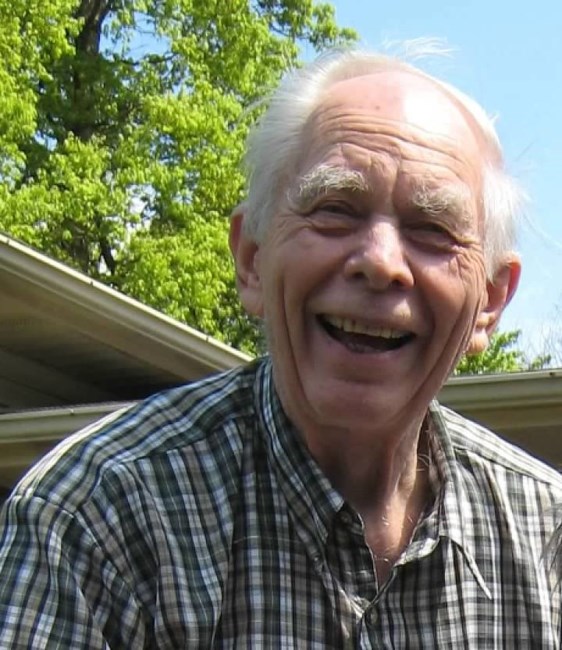
Colonel Robert Eugene Haydon, USAF (Ret.), 92, left this world peacefully as the night passed into the next day on October 10, 2022 in Richmond, VA. Bob was born on October 1, 1930, in Saginaw, Michigan, to Frank P. and Esther Rose (Budd) Haydon who, along with his beloved wife, Helen (Kahny) Haydon, preceded him. He is survived by his daughters, Marianne (William) Ralbovsky, Susan (Brendan) Haydon, and Patricia (Brian) Friedman, who said goodbye to him together in person, and six grandchildren and two great-grandchildren, who spoke to him via Zoom.
From the earliest of his childhood memories, Bob wanted to fly. Later in his childhood, he knew he wanted to serve his country and defend it like his father and older brother were doing in World War II, but he was too young to go with them. Instead, he, his younger brother and their mother were sent to the Philippines, sailing under the Golden Gate Bridge to Manila, where he lived and attended school until the war's end. His graduation there was from the 13th school he had attended in 12 years.
The United States Air Force Academy was in the process of being built when Bob was applying for college and, ironically, was finished the year after he graduated from Annapolis, the United States Naval Academy, where he learned the preliminaries of pilot training; he graduated 3rd in his class [and 1st in Math] and completed a Bachelor's degree in Aeronautical Engineering. One of his suitemates was Ross Perot.
Upon his graduation from Annapolis Bob joined the Air Force and became a pilot. He was on assignment in New York City when he went on a blind date at a Chinese restaurant arranged by a friend with a young scientist named Helen Kahny, who was working at Mount Sinai Hospital doing biomedical research. He proposed to her on New Year's Eve 1954, telling her that he had just received orders for a 2-year tour of duty to Morocco, West Africa, and offering her the options of waiting to get married until he got back or having a quick wedding and coming with him. She didn't hesitate to choose the latter option. Bob and Connie, as he affectionately called her, were married on January 15, 1955, and, after a week-long honeymoon in the Poconos, headed off to Morocco. The deployment was the first of 19 different moves in 38 years of their 54-year marriage. Their love for one another was abundantly clear to everyone who knew them, and they traveled the world together, raised three daughters, and retired happily in Virginia until Connie's death in October of 2009. She was buried in Arlington Cemetery where Bob will join her in 2023.
In the second year of their marriage, Bob and Connie moved to Ann Arbor, Michigan, where Bob attended the University of Michigan and attained a Masters of Astronomical Engineering and a Masters of Aeronautical Engineering. That education, in addition to the Mechanical Engineering degree he had obtained at Annapolis, opened up doors in later years for him helping design and build a large number of airplanes including the X-15, the military predecessor to the Blackbird SR71, and the Wild Weasel program that equipped many types of aircraft with anti-radiation missiles which baited enemy aircraft into targeting the Wild Weasel aircraft with radar. Bob's inventions caused the enemy's radar to be traced back to their sources, which allowed the Americans to precisely track and destroy those planes. In addition to the airplanes he built, he worked with NASA in the Mercury, Gemini, and Apollo space programs, designing the Titan 2 missile, the Saturn 5 rocket booster, and did preliminary design work on the Space Shuttle, making use of both his Astronomical and his Aeronautical Engineering training.
While Bob was undertaking his Masters Degrees in Ann Arbor, he and Connie, who were hoping to be able to have children themselves one day, became temporary foster parents to infants that were waiting for their new permanent parents to be cleared and assigned. It was the first of many selfless undertakings they would share over time, many of them for the benefit of children in need.
When the US entered the war in Vietnam in 1964, the Haydon family was living in California where Bob was assigned to three different Air Force bases, the last of which was Edwards Air Force Base in Kern County. Edwards was where Bob met and befriended Chuck Yeager, who had broken the sound barrier in the Bell X-1 from that base, and began training to be sent to Vietnam. After he attended Survival School, the final preparation for deployment in 1967, the family was relocated to Davis Monthan Air Force Base in Tucson, Arizona. Upon arriving there, Bob purchased a house for his family to live in, something that he had done whenever possible in each of his previous postings. Having been a military brat himself, Bob felt strongly that his wife and children needed to have a life outside the Air Force Base wherever they lived. He got them settled in, planted some flower gardens and an apricot tree with his kids, and then left for Vietnam.
Bob, who was 37 when he went to Vietnam, served as a fighter pilot and reconnaissance pilot from 1967 to 1969 and flew F-4C and F-4D fighter jets in 100 missions over Vietnam and Cambodia. He was stationed in Ubon, Thailand in the Triple Nickel [555] Squadron. One of his most successful missions involved him being responsible for identifying and bombing an underwater bridge to an unoccupied island where a military stockpile was being amassed, for which he received the USAF Meritorious Service Medal.
[Some of his many commendations for extraordinary service are listed below. Virtually every military accomplishment he had was discovered through external sources, however, because Bob was a very humble man and chose not to share glory stories with his kids. Fortunately, they were often in attendance at the launches of the rockets he worked on, so at least they knew about that. His service in Vietnam also earned him the Distinguished Flying Cross.]
When Bob returned home from Vietnam, Connie met him in San Francisco where they had a few days alone before returning to their daughters. Shortly thereafter the family moved to Wright-Patterson Air Force Base in Fairborn, Ohio, where Bob was installed as Director of Research & Development as well as Director of the Reconnaissance Strike System program office. It was at Wright-Pat that he began his work on the X-15 and the Wild Weasel program, which resulted in him being awarded the Legion of Merit.
His next deployment was to Rome Air Development Center at Griffiss Air Force Base in Rome, New York, where he served as head of the Defense Mapping Agency and Department of Intelligence and Reconnaissance from 1974-1977.
Bob followed that up with the final posting in his military career as Chief of Electronics Warfare for the Defense Intelligence Agency, serving out of Pomponio Plaza, in Arlington, VA. He was in the Pentagon on 9/11 and evacuated when the building was attacked across the Potomac via the Arlington Memorial Bridge.
After retirement he went to work in the private sector, working on military and aerospace projects as a civilian. He and Connie went to live several times in Germany and Bob, a long-time runner, undertook running the Berlin Marathon on his 60th birthday, running in and out through the Brandenberg Gate, three days before East and West Germany reunified. He followed up the next year so that he could run through the single nation of Germany, and, having been there for the Fall of the Wall, he and Connie continued to celebrate the event every year with friends who had been there for the momentous event as well. On his 70th birthday in 2000 he ran the Marine Corps Marathon in Washington, D.C., after which he finally hung up his running shoes.
Bob retired at age 75, 52 years after joining the service as an US Air Force Officer. He was constantly active in assisting people in need in all his postings, but once he came to the Washington area he was able to devote more time than he had before. After his final deployment to Pomponio Plaza he and Connie settled down permanently in the Washington DC area, living in Annandale, Fredericksburg, and Falls Church, Virginia. His nomadic military-brat childhood had taken him around the world, so he relished finally having a home after two generations.
The organizations where he spent most of his free time while working and thereafter were FISH [For Immediate Sympathetic Help] of which he was a founding member, and FOCUS, both of which allowed him to employ his advanced construction skills for people in need. In addition to addressing whatever needed repair in his community, such as leaky roofs on the houses of elderly widows, he also designed and built countless larger projects, such as a retirement home for nuns in Northern Virginia.
He also was active in the ministries of every church his family attended, in the communities and on the military bases where he was stationed, and was a 4th-degree member of the Knights of Columbus.
Bob was an avid musician, a tenor singer and gifted piano player, and he included music in every aspect of his life. He loved playing classical pieces like Valse Triste by Jean Sibelius, explaining to his three young daughters the song's tale of a dying woman dancing herself, which inevitably resulted in all of them dancing until they fell to the floor, giggling. He made use of his gift in every opportunity and need that presented itself to him, up to and including playing for his fellow residents in their assisted living facility a few weeks before his passing.
The most important of these activities he shared with the most important person in his wife, Connie, with whom he sang in choirs that entertained both Popes John Paul II and Benedict when they were visiting the US. He was a devoted and long-time member of the Arlingtones Barbershop chorus and many quartets until he turned 90.
Bob left to be with Connie on October 10, 2022. He had been expressing his desire to be with her from the time she passed. His daughters were all with him in his last days, and one of the last things he did was to express his love for each of them. “I'm really hoping I can say goodbye tonight,” was his final sentence. He will be remembered as a great man, a great husband, a great father, and a great American.
SOME OF BOB's MANY HONORS AND AWARDS
MILITARY HIGH HONORS
Meritorious Service Medal
Distinguished Flying Cross
Received the Air Medal twice
Legion of Merit
Air Force Commendation for Gemini Space Flight, 5 manned and 1 unmanned
He won this a second time in 1965 for his knowledge in the area of Launch Vehicles
From the Legion of Merit award certificate:
“Dynamic and brilliant leadership was a major factor in improving the credibility of the Air Force's capability to develop new weapons systems. In particular, Colonel Haydon's efforts in devising new and innovative managerial techniques and management of the advanced Wild Weasel program represent unusually exceptional and far-reaching contributions to the general-purpose military force posture and security of the United States of America Superior Initiative, outstanding leadership and personal endeavor reflect great credit upon himself and the United States Air Force.”
AEROSPACE
Worked on the military team with NASA on the Mercury, Gemini and Apollo programs, designing the Saturn Five rocket booster and the Titan 2 Missile.
Part of the 3-man team that invented the fuel injection system for the Gemini rockets
Worked on the original space shuttle design before retiring.
Show your support
Add a Memory
Share Obituary
Get Reminders
Services
SHARE OBITUARYSHARE
- GET REMINDERS
v.1.18.0